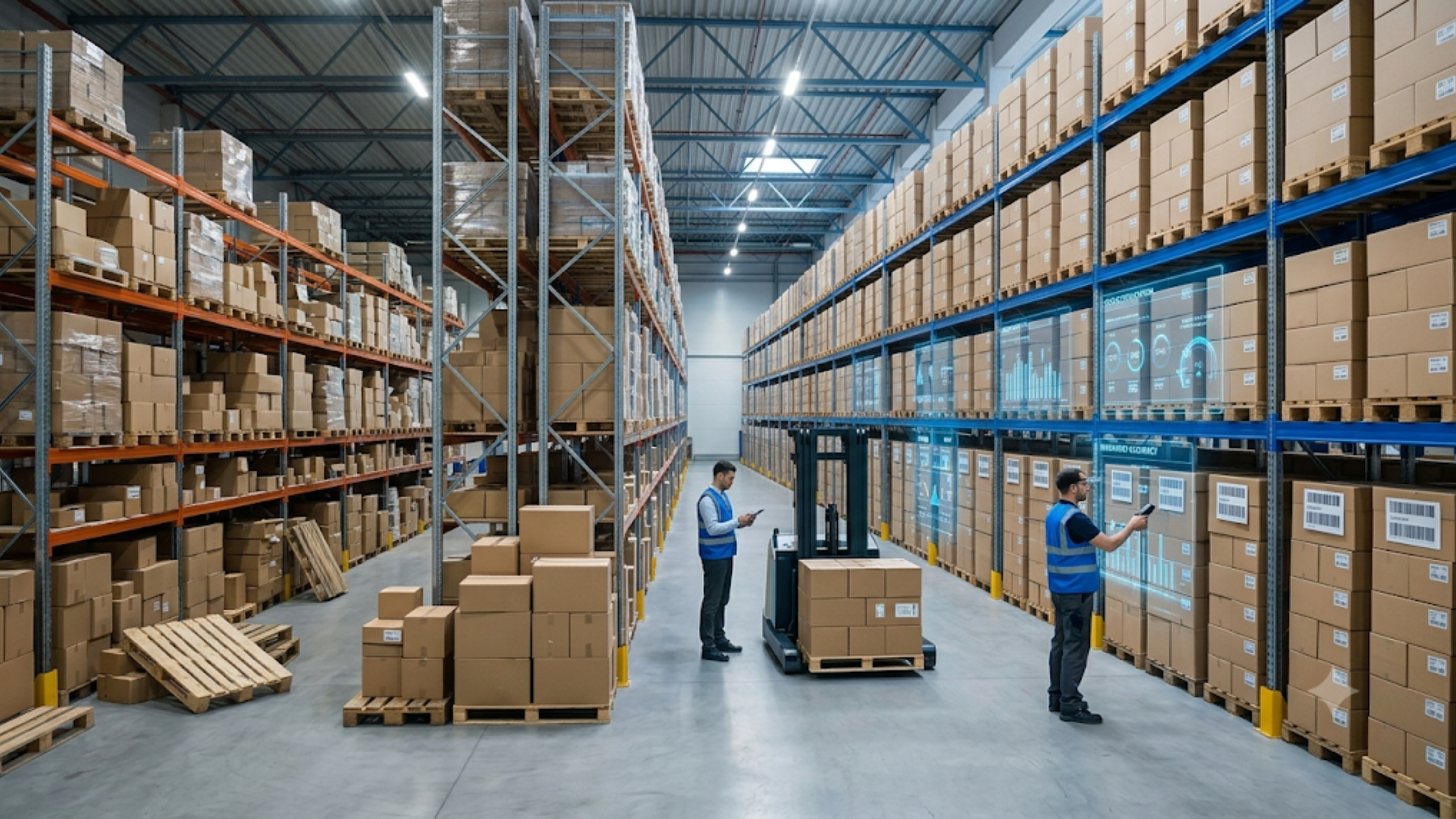

Warehouse and distribution operators face constant pressure to control operating costs while still meeting client and customer expectations for transparency and fair pricing, and that pressure only builds as a network grows across more accounts and more square footage. Most traditional cost-tracking methods weren’t built to catch hidden overhead. Profitability numbers can disguise that gap, looking solid on a report. But those numbers don’t hold up once someone actually scrutinizes where the money is going. At Barcode Consultants, we help warehouse and distribution operations close that gap by connecting financial data directly to what’s happening on the floor, one process at a time.
A warehouse can be full of inventory and still be underperforming.
For 3PL providers, distribution centers, and manufacturing warehouses, profitability depends on much more than the amount of inventory stored. Facility costs, space utilization, labor, utilities, maintenance, inventory movement, technology and operational inefficiencies all contribute to the true cost of running a warehouse.
One of the biggest challenges is that warehouse managers often know their total operating cost but don’t have a clear picture of where those costs originate, how efficiently space is being used, and whether customers are being charged using the right billing model.
A structured warehouse cost analysis can uncover these gaps and identify opportunities to improve both operational efficiency and profitability.
What Makes Up the Cost of Running a Warehouse?
Warehouse costs extend far beyond rent.
A useful warehouse cost structure should consider several categories:
Facility and Space Costs
These can include:
- Warehouse rent or lease expenses
- Property taxes
- Building maintenance
- Repairs
- Security
- Cleaning
- Waste management
- Insurance
- Heating, cooling and water
- Electricity
For 3PL Warehouses, these costs ultimately need to be recovered through storage and handling charges.
The challenge is determining how much warehouse capacity is actually being utilized.
Warehouse Space Is an Asset – Treat It Like One
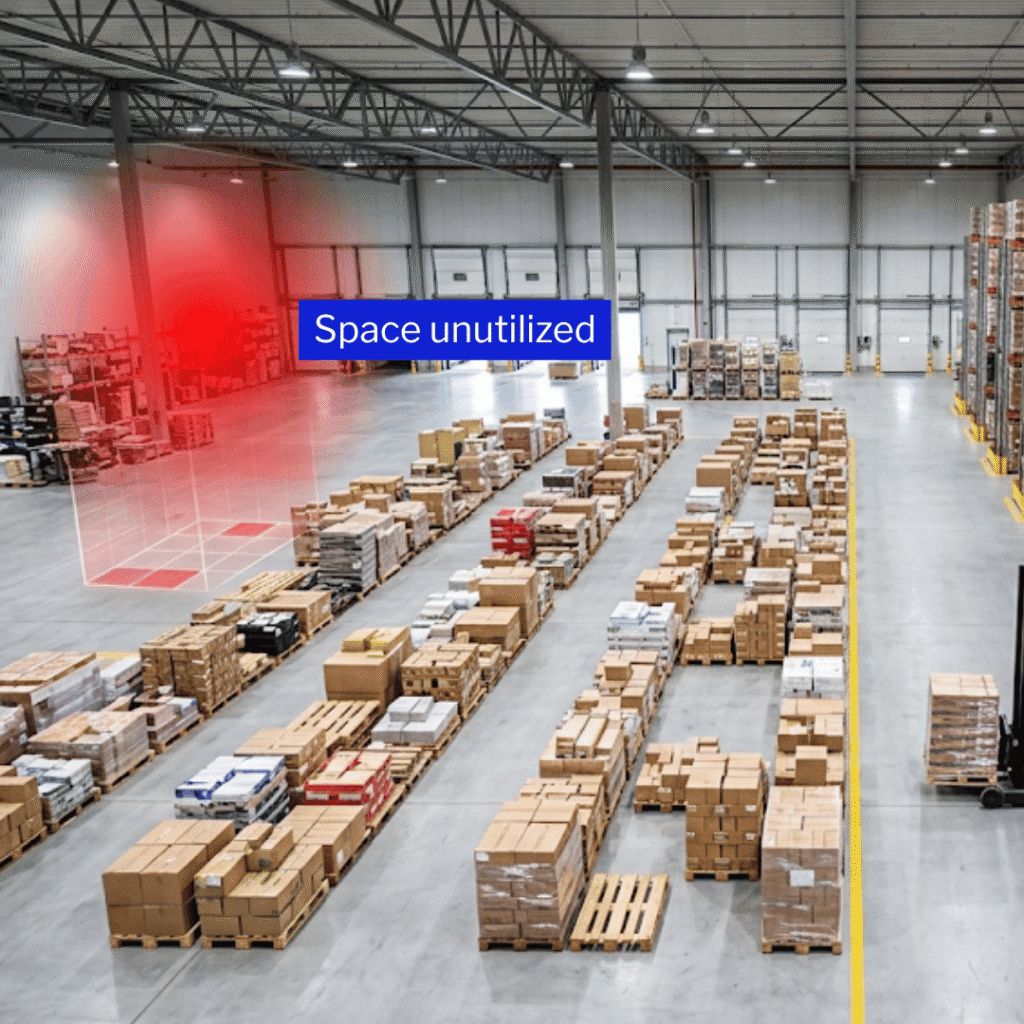
Unused warehouse capacity represents an opportunity cost.
Consider a warehouse with 10,000 pallet positions. If only 7,000 positions are effectively utilized, the remaining capacity may still generate rent, utilities, maintenance and other overhead without producing equivalent revenue.
But maximizing occupancy doesn’t simply mean filling every available location.
A warehouse operating at extremely high occupancy can create:
- Congested aisles
- Poor accessibility
- Longer travel distances
- Difficult picking
- Increased handling
- More misplaced inventory
- Slower receiving and shipping
The objective should therefore be optimal space utilization, not maximum physical occupancy.
Where Overhead Costs Hide
Broad financial statements usually bury costs like insurance, equipment leases, and administrative salaries instead of tying them to the activities that generate them. That makes it nearly impossible to know which part of the operation actually drives those expenses. Our warehouse optimization approach solves this in two ways.
- Direct overhead assignment maps building leases, supplies, and office labor to the operational categories where they actually occur, whether that’s inbound receiving, outbound shipping, storage, or transportation, rather than lumping everything into one general bucket.
- Activity-based costing distributes shared costs, like supervisor time or forklift maintenance, across the specific clients or contracts that generate them, instead of splitting those costs evenly regardless of how much each account actually uses.
This kind of visibility depends heavily on how well your warehouse is set up to track activity in the first place. Without accurate location labeling, standardized workflows, and reliable data capture at every touchpoint, even the best costing framework is left working with incomplete information.
How Warehouse Layout Affects Operating Costs
Warehouse layout directly affects the amount of time employees and equipment spend moving inventory.
Poorly organized storage can increase:
- Travel distance
- Put-away time
- Picking time
- Replenishment activity
- Forklift movement
- Dock congestion
- Inventory search time
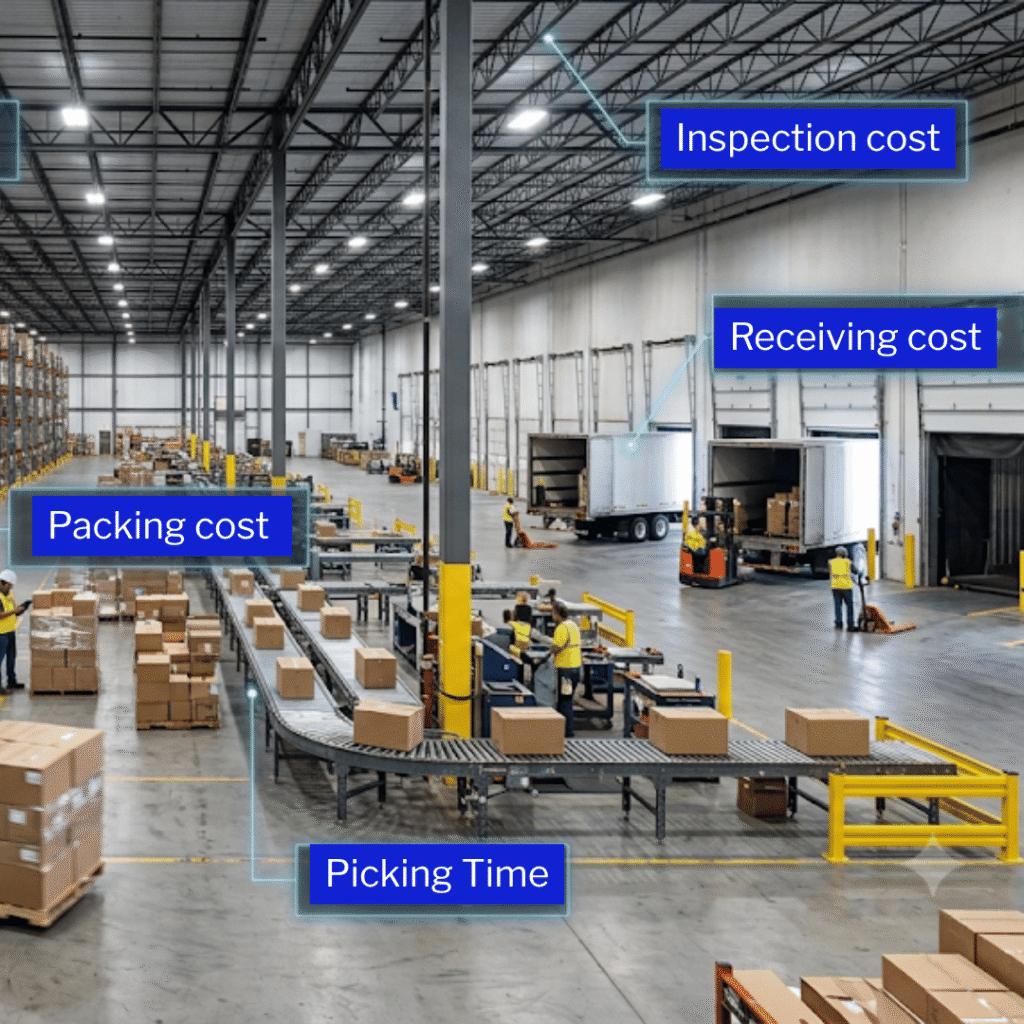
A warehouse optimization assessment should examine the movement of inventory from:
Receiving → Inspection → Put-away → Storage → Picking → Packing → Shipping
Every unnecessary movement creates additional cost.
This is where warehouse slotting, location management and rack labeling become important.
The Role of Warehouse Rack Labeling in Cost Reduction
A warehouse location system should make it immediately clear:
Where is the inventory?
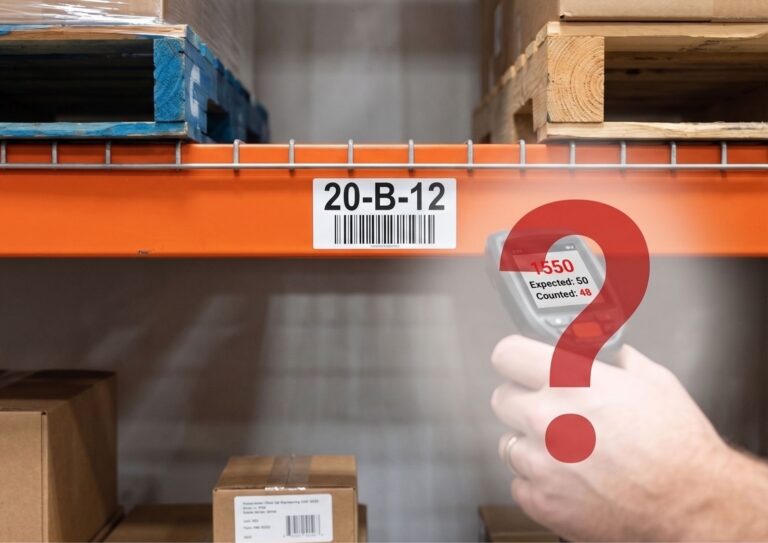
A properly designed warehouse rack labeling system creates standardized warehouse locations that can be recognized by employees, barcode scanners and warehouse management systems.
Effective warehouse rack labeling can help:
- Reduce inventory search time
- Improve picking accuracy
- Speed up put-away
- Standardize warehouse locations
- Reduce misplacements
- Improve employee productivity
- Support barcode-based inventory processes
For high-density warehouses, long-range and retro-reflective barcode labels can also allow operators to identify locations from greater distances.
Uncovering Hidden Inefficiencies
Here’s a scenario we see often:
A client’s storage fees look profitable on paper, but the labor required for custom packaging or handling on their account quietly eats away the margin behind the scenes. Without granular tracking, that imbalance stays invisible until it has already hurt the bottom line. Proper labor and process visibility uncovers issues like this in a few specific ways. Tracking labor consumption shows how tasks like picking, restocking, and packing consume staff time, benefits, and equipment usage.
Expense leaks get identified as underused space, redundant handling steps, or workflows that were never revisited after the operation scaled past its original design. Cost exceptions get flagged the moment a client, task, or shift crosses the expected threshold, so the issue is caught before it compounds. Cost per pallet, per order, or per labor hour gets compared against your own history and industry standards through benchmarking. In one distribution center we worked with, a disproportionate share of equipment maintenance costs traced back to a single client’s oversized and awkwardly packaged inventory.
Once that pattern was visible, renegotiating the storage and handling rate for that account, or adjusting the layout to better accommodate that inventory, became a straightforward decision instead of a guess.
Choosing the Right Warehouse Billing Unit for 3PL Operations
For Warehouse companies, another important question is:
How should customers be charged for storage?
There isn’t necessarily one universal answer.
Depending on the type of inventory, billing may be based on:
- Pallets
- Shelves
- Square feet
- Cubic feet
- Weight
- Containers
- Storage days
- Handling transactions
The research examined in the referenced study found that the appropriate billing unit depends significantly on the characteristics of the goods and the storage method. Pallet-based billing can make sense for palletized shelf storage, while area, volume or weight can be more appropriate for certain bulk-storage environments.
The important lesson is that billing should reflect the resources actually consumed by the customer.
Open, Closed and Hybrid Warehouse Pricing Models
3PL providers can structure their pricing in different ways.
Open-Book Pricing
Costs are transparently shared with customers, with the provider charging based on actual costs and an agreed margin.
Closed-Book Pricing
The customer pays predetermined prices for defined services.
Hybrid Pricing
Different components of the warehouse service are priced using different approaches.
For example: Storage + Handling + Special Services may each have separate pricing structures.
The appropriate model depends on the warehouse’s cost structure, customer requirements, operational complexity and business strategy.
Turning Cost Data Into Smarter Pricing
Once true costs are visible, they become a foundation for pricing decisions instead of reactive guesswork. That means factoring in the full cost to serve a client, including overhead like administrative labor, insurance, and maintenance, rather than pricing off storage and labor rates alone. Operators who take this approach consistently build tiered pricing that actually reflects what each account costs to run, instead of a rate that was set once years ago and never revisited since.
A Practical Warehouse Cost Optimization Framework
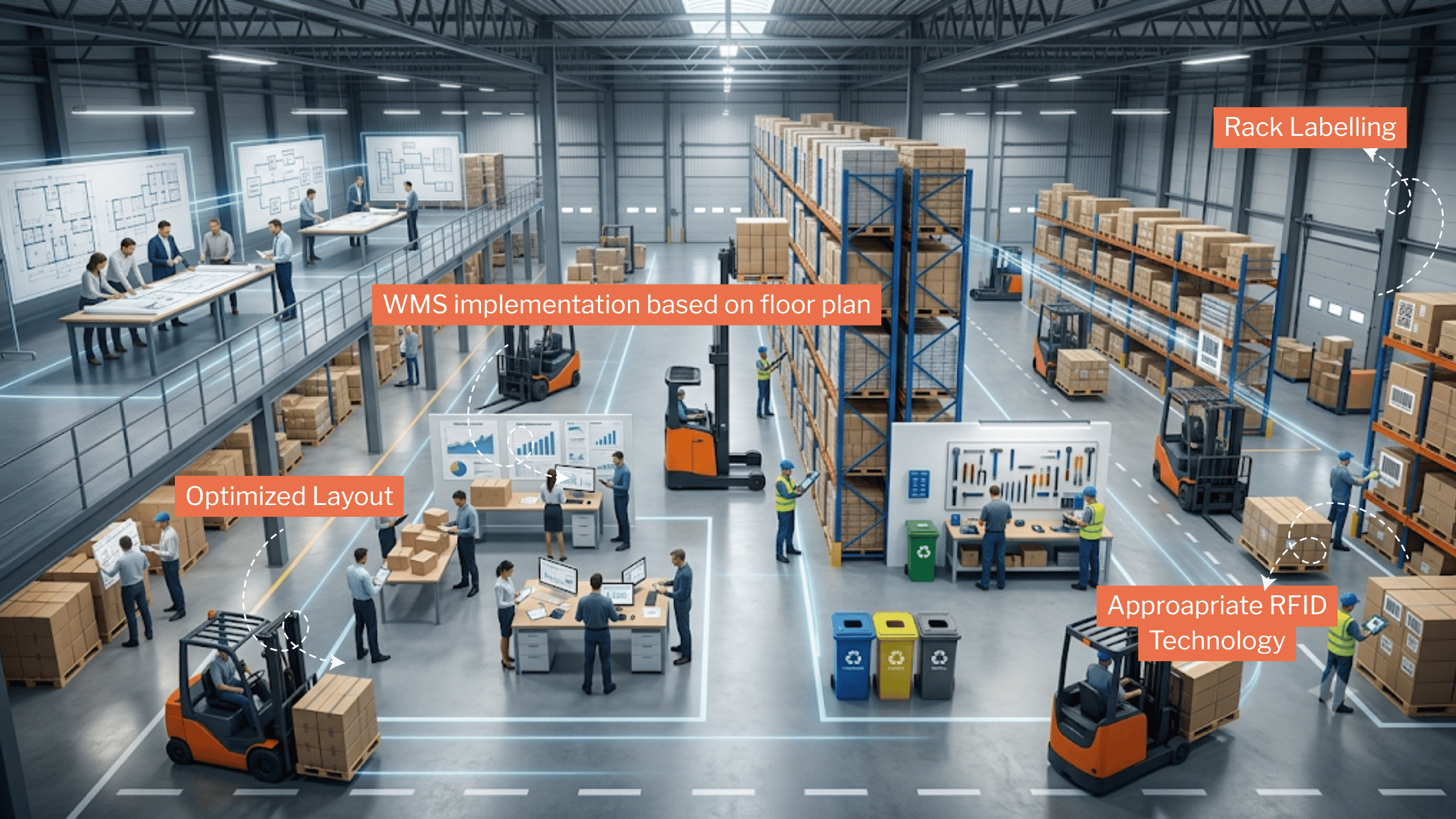
Warehouse managers can approach optimization through five steps.
Step 1: Map the Current Operation
Document how inventory moves through the facility.
Step 2: Measure the Costs
Identify facility, labor, technology, maintenance, handling and inventory-related costs.
Step 3: Measure Space Utilization
Determine how much capacity is available, occupied and effectively usable.
Step 4: Identify Operational Waste
Look for unnecessary travel, duplicate data entry, manual processes, poor labeling, inventory searches and inefficient storage.
Step 5: Implement Technology Where It Creates Measurable Value
Potential solutions may include:
- Barcode scanning
- Automated label printing
- Warehouse rack labeling
- WMS implementation
- ERP integration
- Wireless infrastructure
- Automated print-and-apply systems
- Workflow automation
The objective isn’t to add technology for its own sake.
It is to eliminate measurable operational waste.
Why the Physical Warehouse Matters as Much as the Data
A cost model is only as good as the data feeding it, and that data starts on the warehouse floor long before it ever reaches a spreadsheet. Mislabeled racks, inconsistent location naming, and manual data entry all introduce errors before a cost report gets generated. This is where operational fundamentals separate a cost analysis that’s merely directional from one precise enough to act on.
At Barcode Consultants, our approach starts with the basics: accurate barcode scanning, clearly labeled rack and location systems, and a warehouse management system that’s properly integrated with your ERP. When those fundamentals are solid, the labor, inventory, and activity data flowing into your cost model is accurate, which means the pricing and process decisions built on top of it hold up too. We’ve spent over 30 years helping distribution and manufacturing operations fix exactly this kind of gap, and we don’t stop at recommendations — our team handles the hands-on implementation, from rack labeling and wireless infrastructure to training your staff on the new systems.
Conclusion: Optimize the Warehouse Before Adding More Space
When warehouse costs increase, the first response is often to look for more space or more labor.
But the better starting point may be the warehouse you already have.
Improving location accuracy, space utilization, inventory visibility, warehouse layout, barcode processes, wireless connectivity and WMS integration can unlock capacity without necessarily expanding the facility.
For 3PLs and warehouse operators, the goal isn’t simply to store more inventory.
The goal is to move, store and manage inventory at the lowest sustainable cost while maintaining accuracy and service levels.
That starts with understanding exactly where warehouse costs come from – and then designing the operation around measurable efficiency.