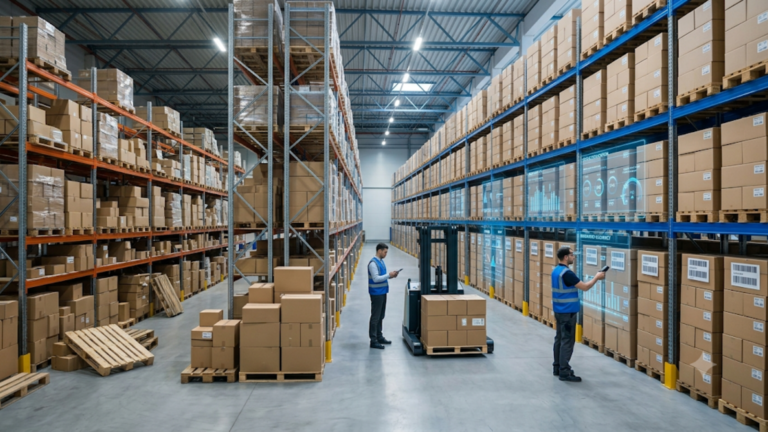
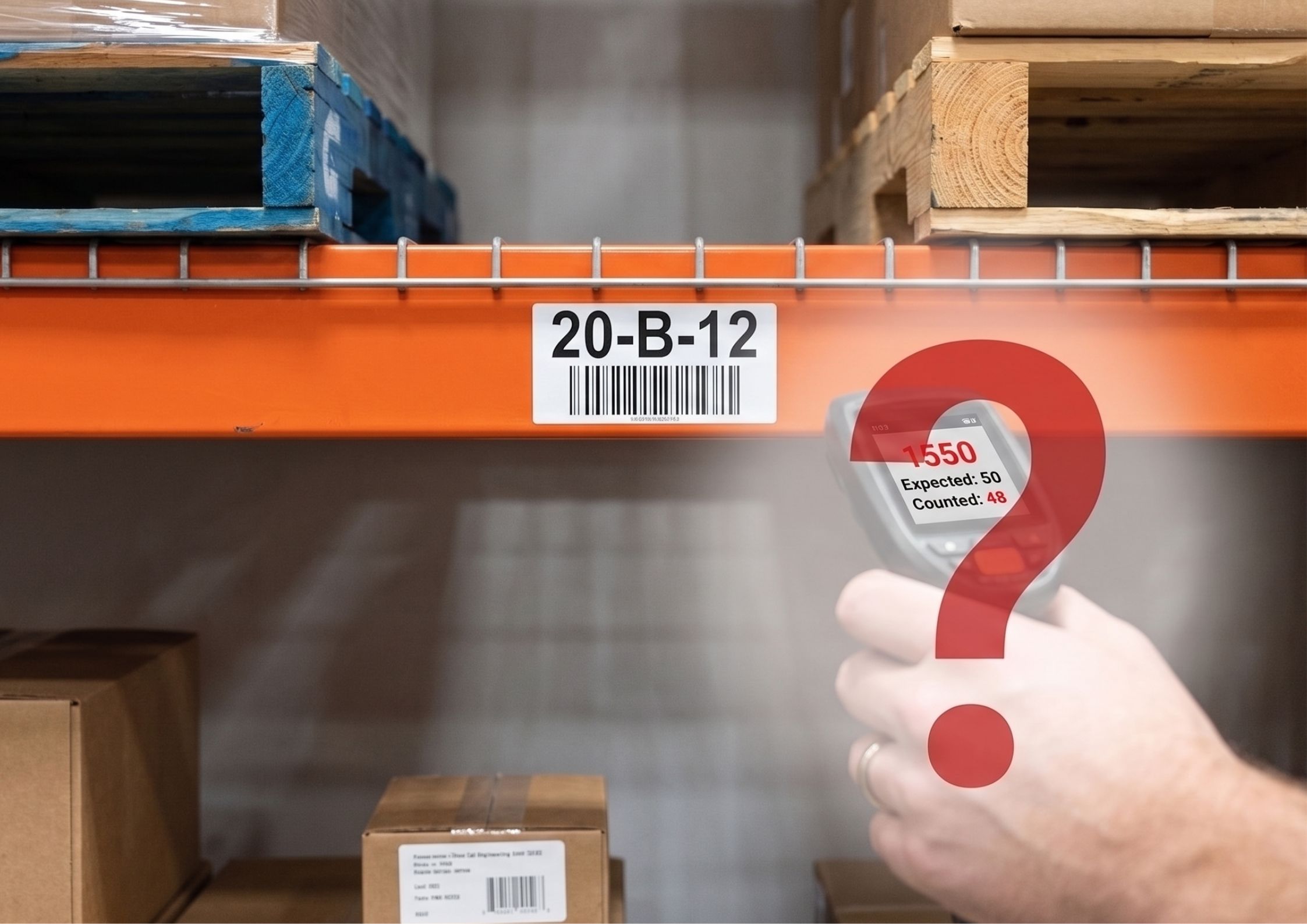

Labeling seems basic when running a warehouse—until poor execution creates serious problems. Misplaced inventory, slower picking times, frustrated new hires, and a floor that turns into operational chaos during peak season. Knowing how to use warehouse rack labels correctly isn’t a nice-to-have; it’s one of the foundational pieces that determines whether the rest of your operation runs smoothly or fights itself every day..
Whether you’re re-labeling a facility that has grown past its original layout or setting up a newly acquired space from scratch, we walk every client through these four steps to get warehouse rack labels right the first time.
Why Warehouse Rack Labels Matters
Before getting into the process, it’s worth being clear on what a solid rack labeling system actually gets you:
- Less time wasted hunting for inventory
- Higher order accuracy and faster pick rates
- Room to grow — new SKUs, new zones, new layouts
- Cleaner FIFO/LIFO inventory flow
- Smooth integration with your WMS and scanning hardware
With that in mind, here’s how the process of installing warehouse rack labels actually breaks down.
Step 1: Understand Your Storage Types
The first step is taking stock of what storage systems your facility actually uses. Most warehouses run a mix of formats, and each one comes with its own labeling considerations.
Pallet racking — Rack height and scanning distance both matter here. For any location above 10 feet, retro-reflective labels are the safer call, since standard labels lose readability at that range. Color-coding by rack level (black for floor level, red for the second tier, for example) cuts down on picking errors and speeds up training for new staff. If your racks have rain guards or wire trays, labels need to sit in a spot that stays visible and scannable, not tucked behind hardware.
Step 2: Match Labels to Your Scanning Technology
Warehouse racking labels are only useful when your scanners can read them reliably. This step focuses on pairing labels with the right scanning technology:
- Short-range scanners for shelf-level or elevated platforms
- Long-range scanners (up to 28 feet) for ground-based scanning on tall racks
- Totem placards for vertical readability in narrow-aisle setups where a standard label just isn’t visible from the aisle floor
Getting this mismatched is one of the most common — and most avoidable — causes of slow picking. A worker who has to aim and re-aim a scanner to catch a label adds seconds to every single pick, and those seconds add up fast across thousands of daily transactions.
Step 3: Build a Scalable Location Numbering System
This is where a lot of warehouses get into trouble down the line — not because their current system doesn’t work, but because it can’t handle growth. We design location codes using a structured hierarchy:
Warehouse ID → Aisle → Level → Bay → Slot
A few details make a real difference here:
- Using leading zeros (01-A-C-22, for instance) so the system can expand without renumbering everything later
- Color-coding by level for fast visual identification
- Adding directional arrows so staff can navigate rows without guessing
We also provide barcode-ready files and easy-to-edit location templates so your team can manage additions or changes without starting over each time.
Step 4: Select the Right Label Type for Each Zone
Not every part of your warehouse needs the same label. Matching label type to environment is what keeps warehouse rack labels legible and scannable over time instead of fading, peeling, or becoming unreadable within a few months.
| Label Type | Ideal For |
| Standard Rack Labels | Floor-level racks, general storage zones |
| Retro-Reflective Labels | High racks, long-range scanning above 14 ft |
| Magnetic Labels | Temporary or rotating storage areas |
| Totem Placards | Dense rack aisles needing vertical visibility |
| Hanging Signs | Bulk and floor-stack zones with ceiling-mounted signage |
| Shelf Labels | Compact inventory stored on metal shelving |
Why Labeling Is the Foundation – and Why It’s Worth Getting Right
An efficient warehouse starts with clear, consistent warehouse rack labels. When staff know exactly where to go and scanners read locations instantly without hesitation, the results show up everywhere: faster picking, fewer misplaced items, and a noticeable jump in order accuracy. It also makes onboarding new employees far easier, since a logical, well-marked layout is something people can learn in days instead of weeks. A scalable labeling system helps your warehouse absorb new SKUs, new zones, or a full layout change without requiring a complete redesign from the ground up.
This is exactly the kind of work Barcode Consultants (best warehouse optimization service provider) was built around. With over 30 years of hands-on experience across distribution and manufacturing warehouses nationwide, we don’t hand over a generic labeling template and walk away — we engineer a system specific to your facility’s layout, storage mix, and scanning technology. That includes custom location numbering, barcode-ready label designs, retro-reflective and totem signage for high-rack environments, and full installation handled by our team from start to finish.
Our labeling projects typically fold into a broader warehouse optimization engagement, since labeling rarely exists in isolation from your WMS, your wireless network, and how your staff are trained to use both. We handle Warehouse rack labeling and signage, network cabling and infrastructure, and staff training as part of one coordinated rollout, so every piece of your operation is working off the same accurate location data.
If your current labeling setup is slowing down picks, confusing new hires, or simply wasn’t built to handle the volume you’re running today, it’s worth a second look before it costs you more in labor and errors. Schedule a free consultation with Barcode Consultants and we’ll walk your facility, assess your current layout, and show you exactly where a better labeling system would pay for itself.
FAQ: How to Label Warehouse Rack
What’s the best approach for warehouse rack labels and numbering locations? Use a sequential hierarchy — warehouse, aisle, level, bay, slot — with leading zeros (e.g., 01-A-C-22) so the system can expand as you add SKUs or zones without renumbering existing locations.
What type of label should I use for tall pallet racking? For any rack location above 10–14 feet, retro-reflective labels hold up best, since standard labels become difficult for long-range scanners to read at that distance.
How often should warehouse rack labels be replaced? Inspect labels quarterly in high-traffic zones. Standard labels in general storage typically last several years; magnetic and retro-reflective labels should be checked for fading or peeling on the same schedule.
Can I use the same label type throughout the whole warehouse? Not usually. Matching label type to environment — pallet racking, narrow aisles, bulk floor-stack zones, metal shelving — keeps labels scannable and cuts down on misreads.