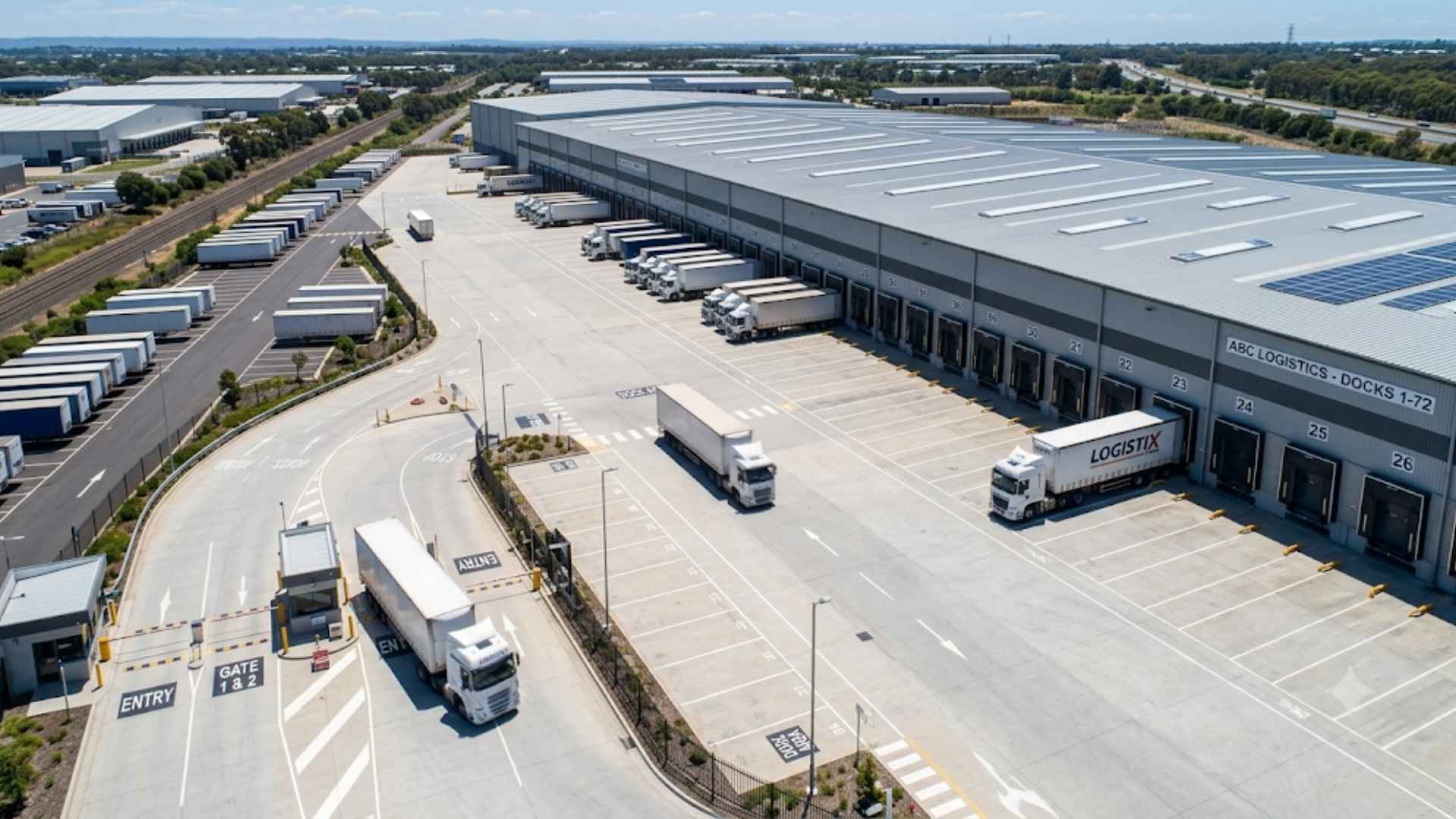

For many warehouses and 3PL operations, one of the first bottlenecks of the day happens before a truck ever reaches a dock door.
A driver arrives at the facility, waits at the gate, provides appointment and load information, waits while someone verifies the information, receives instructions, and finally proceeds into the yard. Multiply that process by dozens of trucks each day and the gate can quickly become a source of congestion, administrative work, and unnecessary driver dwell time.
GateTrac™ changes that process by allowing drivers to check themselves in using their own smartphone.
Turn the Driver’s Phone into a Self-Service Check-In Station
GateTrac™ provides warehouses with an unattended self-service option that can reduce the amount of manual interaction required when a truck arrives.
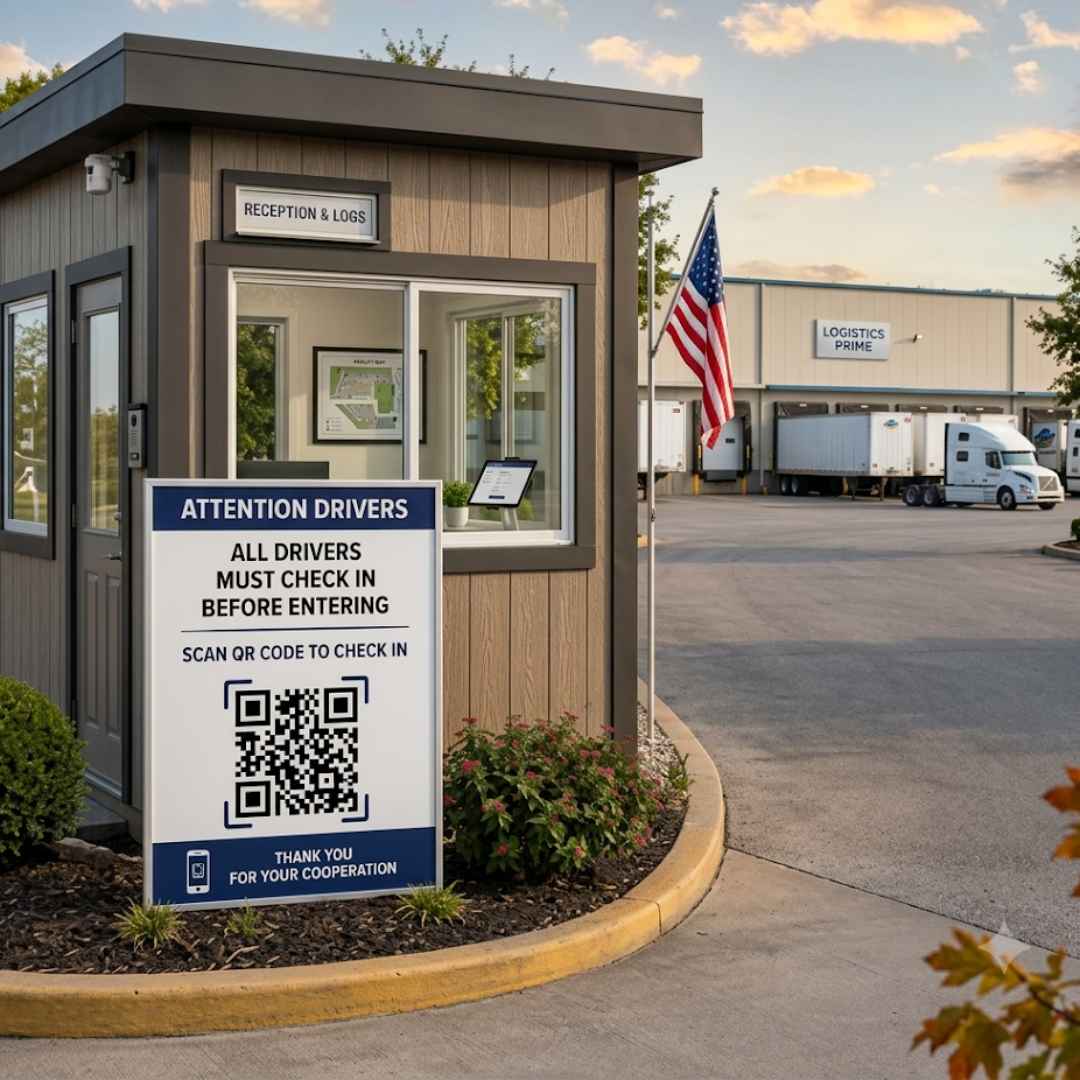
Instead of requiring every driver to be processed by a guard or warehouse employee, a driver arriving at the facility can simply scan a GateTrac™ QR code posted at the entrance or follow a mobile link.
No specialized handheld device is required for the driver, and the process can be completed directly from a smartphone (Android or iPhone supported). No application downloads needed.
For drivers with a scheduled appointment, GateTrac™ can identify the appointment and allow the driver to confirm the appropriate information. For drivers arriving without an appointment, the system can collect carrier, trailer, load and other required information and submit it to warehouse personnel for review.
The warehouse immediately has a digital record of the arrival.
From Gate Arrival to Yard Instructions in Minutes
A typical GateTrac™ self check-in can follow a simple process:
1. Driver arrives at the facility.
A GateTrac™ QR code and instructions are displayed at the entrance.
2. Driver scans the QR code.
The driver uses the camera on their smartphone to begin the mobile check-in process.
3. GateTrac™ identifies the appointment.
When an appointment exists, the driver can confirm the information associated with the visit. If there is no appointment, the driver can provide the information required by the facility.
4. Arrival information is captured digitally.
The warehouse can see that the truck has arrived without waiting for someone to manually enter information from paperwork into another system.
5. The driver receives instructions.
Based on the facility’s workflow, the driver can be directed to a dock door, staging location, parking position or other designated area.
6. GateTrac™ begins tracking the visit.
The arrival becomes part of the trailer’s digital transaction history, providing timestamps that can later be used to measure dwell and overall turn time.
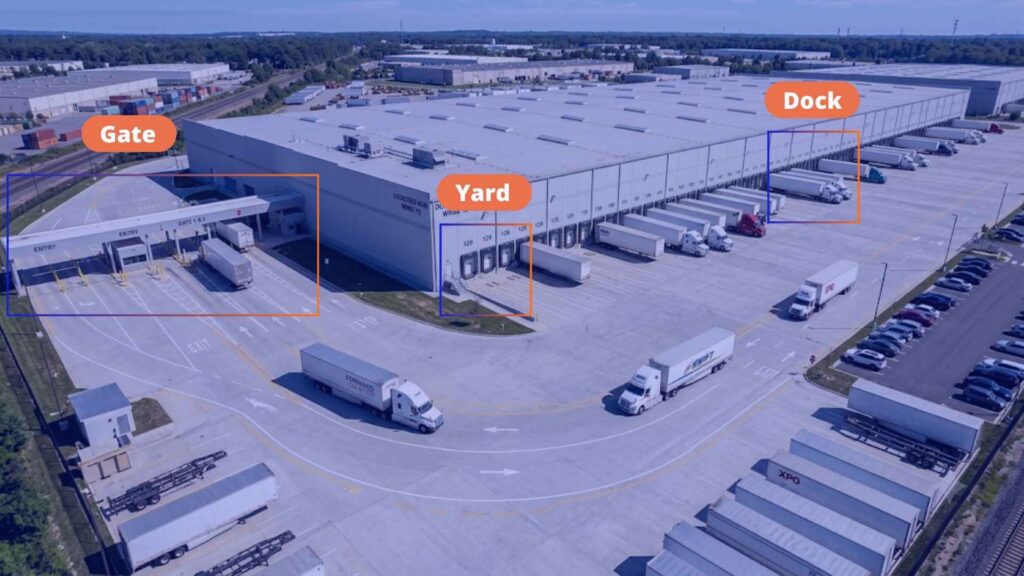
The result is a much more efficient transition from Road → Gate → Yard → Dock.
Why Self Check-In Matters
The traditional gate process has a fundamental limitation:
Every truck requires someone’s attention.
If 10 trucks arrive within a short period and one employee is responsible for checking them in, the throughput of the gate is limited by how quickly that employee can process each driver.
Self-service changes the equation.
Multiple drivers can initiate their own check-in without requiring an employee to manually process each arrival one at a time. Warehouse personnel can focus their attention on exceptions and operational decisions rather than routine data entry.
The potential improvement is significant. DHL Supply Chain reported that its own QR-based Driver Self Service solution reduced load check-in/check-out time by up to 50%. Other digital check-in providers similarly report that mobile self-service can substantially reduce the time associated with manual arrival processing.
Reduce Gate Congestion
Faster processing isn’t only about saving a few minutes.
When trucks begin backing up at a warehouse entrance, the problem can affect the entire operation.
Drivers spend more time waiting. Trucks may idle outside the facility. Warehouse employees receive calls asking about arrivals. Dock schedules become harder to maintain. A delay at the entrance can eventually become a delay at the dock.
Digital check-in attacks that bottleneck at its starting point.
The moment the driver checks in, warehouse personnel can have visibility into the arrival and begin making decisions about where that truck should go next.
Give Warehouse Employees Their Time Back
Consider a warehouse processing 50 truck arrivals per day. Don’t forget that 50 trucks in also means tracking 50 trucks out.
If the traditional check-in process requires an average of five minutes of employee involvement per truck, that’s approximately:
50 trucks × 5 minutes = 250 minutes per day
That’s more than four hours of employee time every day devoted simply to processing arrivals.
GateTrac™ self check-in doesn’t necessarily eliminate every minute of that work. There will always be exceptions that require human involvement.
But that’s exactly the point.
Your people should be managing the exceptions – not manually processing every routine transaction.
A scheduled driver with the correct appointment, carrier and load information shouldn’t necessarily require the same employee attention as an unexpected driver with missing information.
GateTrac™ allows the warehouse to distinguish between the two.
Improve the Driver Experience Too
The benefits aren’t limited to the warehouse.
Professional drivers operate under tight schedules. Waiting at a gate, parking the truck, walking to an office, filling out paperwork and waiting for instructions all consume time.
A mobile self-service process allows the driver to provide information without unnecessary back-and-forth.
The industry is increasingly moving in this direction. Digital driver check-in systems use QR codes and mobile devices to reduce paperwork, automatically record arrivals and provide warehouse teams with real-time visibility into who is waiting.
That means a better experience for the driver while simultaneously creating a better operational process for the warehouse.
Self Check-In Is Only the Beginning
One of the biggest advantages of GateTrac™ is that self check-in isn’t a standalone process.
Once the truck enters the GateTrac™ workflow, the facility can continue managing the trailer throughout its visit.
GateTrac™ can provide visibility into:
- Appointments and scheduled arrivals
- Driver check-in and check-out
- Trailer and container locations
- Yard and staging positions
- Dock-door assignments and availability
- Trailer status
- Arrival and departure timestamps
- Dwell and turn time
- Detention and demurrage
- Yard occupancy
- Carrier activity
- Complete transaction history
GateTrac™ can also support both attended and unattended gates, so facilities don’t have to choose one operating model. A guard can process certain drivers while other drivers use self-service, with both workflows feeding the same GateTrac™ record. (Barcode Consultants)
You Don’t Need an Enterprise YMS to Improve Your Gate
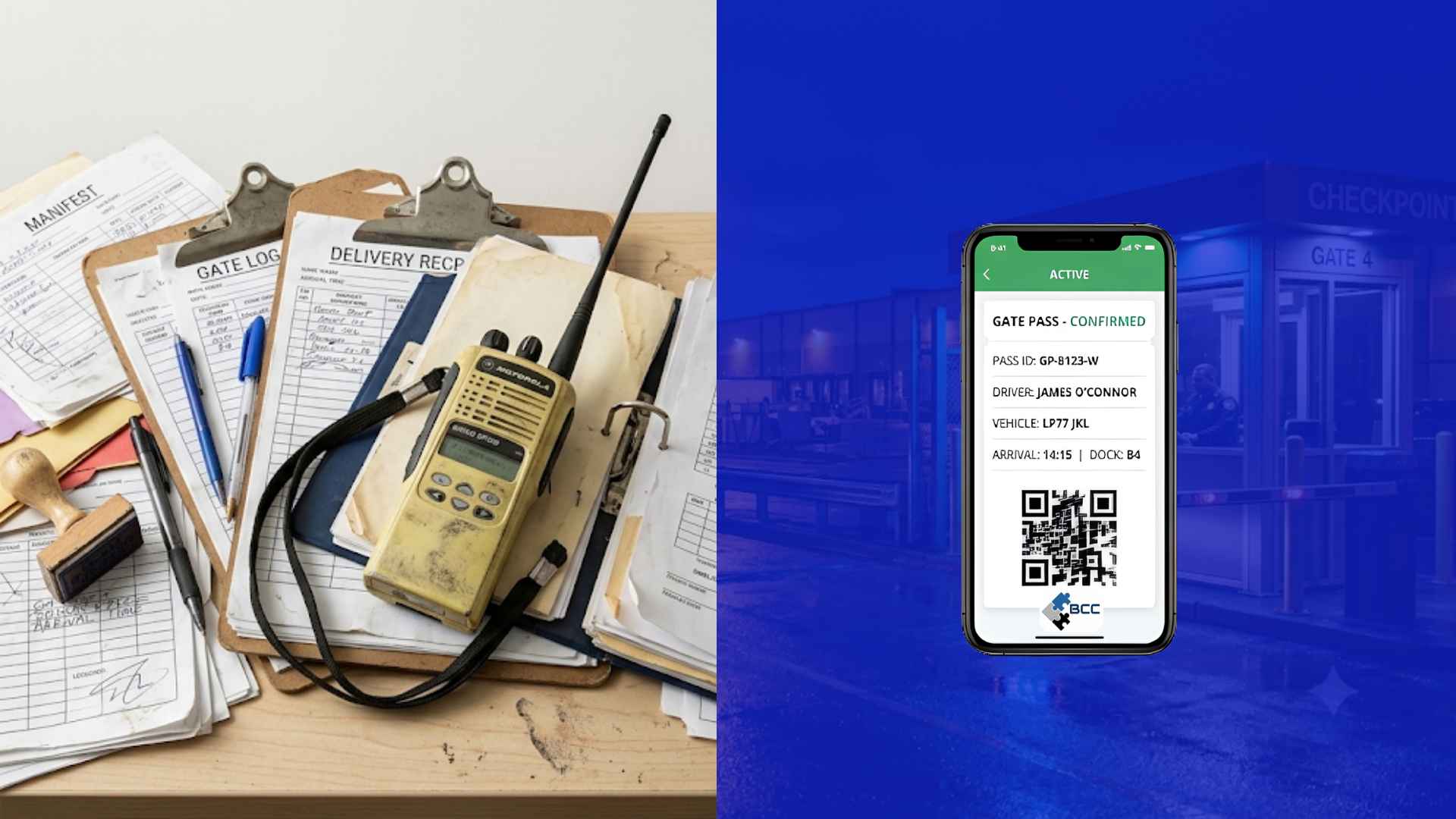
Many small and midsize warehouses recognize that their manual gate processes are inefficient but aren’t ready to invest in a large, complex Yard Management System.
That’s the gap GateTrac™ is designed to address.
A facility can begin by solving a very straightforward problem:
How do we get trucks through our gate faster with less manual work?
Then extend that visibility into the yard, staging areas and dock doors.
GateTrac™ gives warehouses and 3PLs a practical way to move beyond spreadsheets, radios, paper logs and manual gate processing without taking on the complexity of a traditional enterprise YMS.
How Efficient Is Your Gate Today?
Ask yourself a few questions:
How long does it take an arriving driver to get through your gate?
How many employees are involved in processing each arrival?
What happens when five or ten trucks arrive at approximately the same time?
Could routine drivers check themselves in instead?
If your gate is creating unnecessary delays, GateTrac™ can help turn the arrival process from a bottleneck into an efficient, digital workflow.
Scan. Check in. Get your instructions. Keep moving.
That’s the idea behind GateTrac™ Driver Self Check-In.
The Business Impact of Gate and Dock Delays
A chaotic yard without a digital management system creates measurable financial consequences for both carriers and warehouse operators. Detention fees, which are triggered when a driver is held beyond the standard two-hour free window, typically cost between $50 and $100 per hour.
According to a 2024 study by the American Transportation Research Institute (ATRI), drivers faced detention at 39.3% of their stops in 2023. This widespread delay cost the US trucking industry an estimated $15.1 billion in a single year, accounting for roughly 135 million lost hours. Beyond carrier penalties, poor dock management creates internal friction for warehouses; businesses often have to pay out overtime wages to staff just to resolve unexpected congestion.
An unstructured arrival process can also compromise safety on-site, with a US Department of Transportation audit estimating that just a 15-minute increase in average dwell time raises a truck’s expected crash rate by 6.2%.
The Power of Integrated Dock Management
Industry leaders emphasize that connecting the gate to the ramp is essential for operational predictability. Looking at comprehensive platforms like the EPG ONE Dock Management system, the value of digitization becomes clear, as these solutions automate every step from the gate to the ramp. By implementing features like intelligent slot booking and automated check-in and check-out, facilities can balance yard utilization and maintain smooth truck flows.
- Real-Time Visibility: Digital systems provide an instant overview of vehicle locations and yard activities, which prevents traffic jams and improves site accessibility.
- Resource Optimization: With predictable, coordinated arrivals, managers can plan staffing and equipment much more efficiently, lowering overall operational costs.
- Paperless Communication: Eliminating manual data entry speeds up workflows and connects logistics managers, carriers, and warehouse staff without endless emails or phone calls.
How GateTrac outsmarts the competition
While comprehensive enterprise Yard Management Systems (YMS) exist, they are often bulky, expensive, and complex to deploy. GateTrac™ takes a smarter, frictionless approach that focuses on rapid results without the enterprise bloat [source: 1].
- Zero Friction for Drivers: Unlike competing systems that force drivers to install proprietary software, GateTrac™ requires no app downloads. Drivers simply scan a QR code or follow a mobile link using their standard smartphone.
- Practical Scalability: Facilities do not need to invest in a massive enterprise YMS to solve their gate bottleneck. GateTrac™ allows warehouses to immediately tackle arrival congestion and progressively extend visibility into staging areas and dock doors as needed.
- Hybrid Flexibility: Many competitors force a choice between automated systems and human guards. GateTrac™ supports both attended and unattended gates simultaneously, seamlessly merging guard-processed drivers and self-service drivers into the exact same digital workflow.